
IF Brommapojkarna are part of a clear pattern in this year's Allsvenskan. Clubs playing on artificial turf have performed significantly better than those with natural grass pitches, with BP sitting in 11th place with 34 points after 27 rounds.
After 27 matches, the seven artificial turf clubs have accumulated 338 points in total, averaging 48.3 points per team. The nine clubs on natural or hybrid grass, however, have just 259 points, averaging 28.8. The difference is 19.5 points per club. Six of the seven artificial turf clubs currently occupy the top six positions in the league table.
BP's place in the pattern
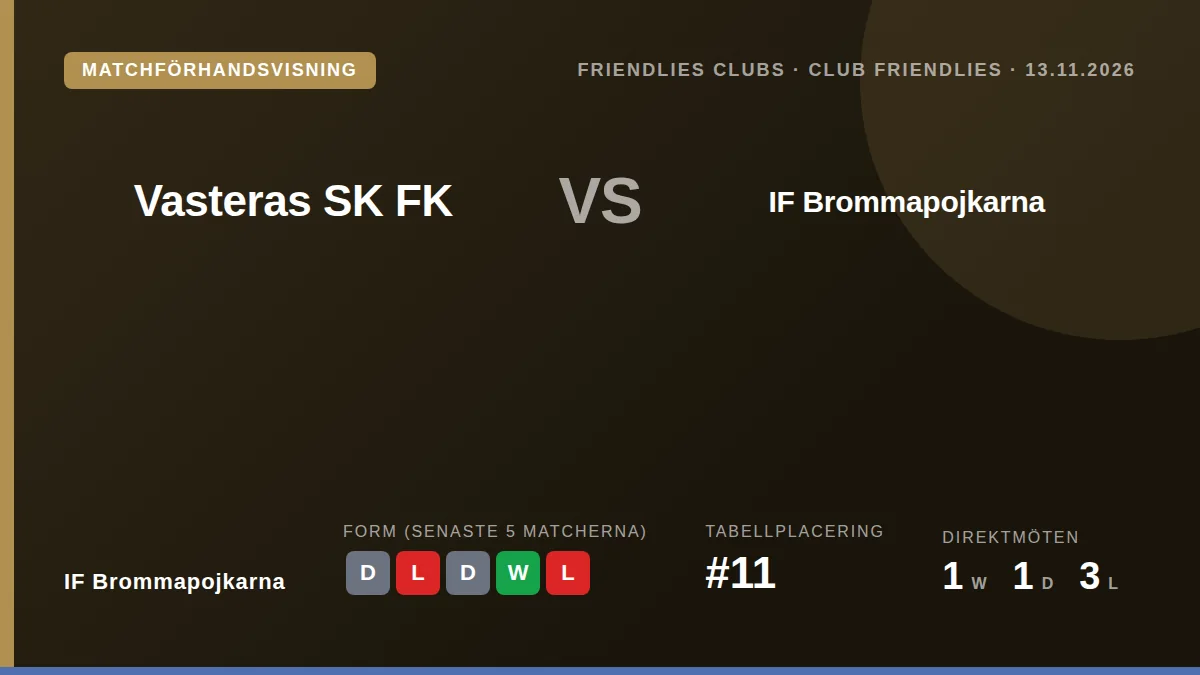
Brommapojkarna, who play their home matches on artificial turf, are in 11th place with their 34 points. They have won nine, drawn seven and lost eleven games. The team has scored 39 goals and conceded 44, giving them a goal difference of minus five. Their last five results read two losses, two draws and one win.
Magnus Eriksson has commented on the conditions. "Det spelas enormt mycket fotboll på ganska dåliga gräsplaner", he says.
Historical statistics tell a different story
Despite the large points gap this year, a broader statistical analysis of 2,400 matches between 2016 and 2025 shows that artificial turf itself provides a very small advantage. The home advantage on artificial turf was only 0.026 points per match, a figure that is not statistically significant. The general home advantage in the league is instead estimated at 0.257 points per match.
Mjällby AIF, who won Allsvenskan in 2025 on natural grass, are an example that the surface is not everything. They have dropped significantly this year and are in 12th place with 27 points, despite an unchanged pitch. It is Mjällby who are the opponents in Brommapojkarna's next match, a home fixture at Grimsta IP on Sunday. Both teams are close in the table and will be looking to break their negative form. The club's top scorer this season is M. Hansen with eight goals.
First reported at SVT Nyheter